
Sunday Musings - The Cities We Learn Not To See
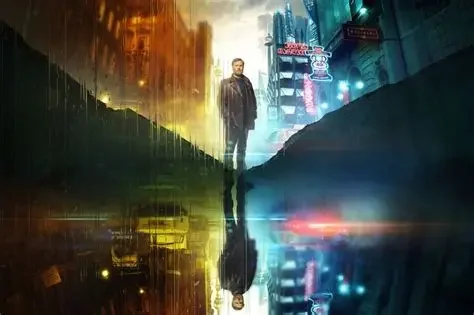
One of the great strengths of speculative fiction is that it can ask questions most people would instinctively avoid if they were asked directly. Sit somebody down and announce that today's discussion concerns nationalism, class consciousness, political identity and the social construction of borders, and you'll probably lose them before the kettle has boiled. Wrap those same ideas inside a detective novel where two cities occupy the same streets, however, and suddenly readers are happily racing through three hundred pages without quite noticing that they've spent the weekend thinking about Marxism, international relations and the nature of reality itself. Fantasy and science fiction have always excelled at smuggling philosophy across the border disguised as entertainment, and very few modern writers have become as adept at that particular act of literary espionage as China Miéville.
That should perhaps come as little surprise. Miéville has never been a writer interested in escapism for its own sake. Long before he became one of the defining voices of the New Weird movement, he was immersed in political theory and international relations, writing extensively about Marxism and revolutionary history, with a particular fascination for Russia, the Soviet experiment and the way societies reinvent themselves after moments of political upheaval. Once you know that, The City & The City begins to reveal itself as something rather different from the detective novel it initially appears to be. Inspector Tyador Borlú's investigation into the murder of a young woman provides the engine that drives the narrative, but it is not the destination. The murder is almost incidental. Like all good detectives, Borlú exists because he notices things that everybody else has learned not to see, and that simple observation becomes the key to understanding everything Miéville is really writing about.
The central question hiding beneath every page is remarkably simple and profoundly uncomfortable. How much of the world exists because we have collectively agreed that it does? Countries feel permanent. Borders appear natural. Nations seem eternal. Yet history repeatedly demonstrates that none of those assumptions are particularly reliable. Empires collapse. Republics fragment. Kingdoms merge. Flags change. Constitutions are rewritten. Maps that once appeared immutable become historical curiosities in the space of a single generation. The forests remain where they always stood. Rivers continue flowing towards the sea with complete indifference to parliamentary debate. Mountains refuse to acknowledge treaties. It is only the stories people tell about those landscapes that change, and once those stories change, politics follows with extraordinary speed. The Russian Empire became the Soviet Union before splintering into fifteen independent states. Yugoslavia dissolved into countries that, only decades earlier, had been presented as inseparable. Germany divided itself into East and West before deciding, eventually, to become one nation again. None of these transformations required geography to move an inch. They required only millions of people to begin imagining themselves differently.
Besźel and Ul Qoma are not fantasy cities because they possess magic. They are fantasy cities because Miéville has exaggerated a truth that already exists. Two national identities occupy precisely the same physical landscape, separated not by walls or rivers but by habit, education and culture. Citizens are taught from infancy to "unsee" one another, to ignore buildings that are physically visible, to pretend neighbours occupying the opposite pavement do not exist. It initially feels absurd, almost comic, until the reader realises how effortlessly their own brain has accepted the premise. Before long we, too, stop questioning it. We become complicit in the illusion. The remarkable achievement of the novel is that Miéville doesn't ask us to suspend disbelief. He demonstrates how easily disbelief can be trained away.
This is perhaps the novel's most quietly Marxist observation. Antonio Gramsci argued that power achieves its greatest success not through force but through cultural hegemony: the slow process by which political ideas become accepted as simple common sense. Once a society has internalised its assumptions, coercion becomes largely unnecessary because people police themselves. Nobody in Besźel needs an armed guard reminding them not to acknowledge Ul Qoma. Nobody in Ul Qoma requires constant surveillance to prevent them seeing Besźel. The citizens perform that labour voluntarily because they have absorbed the rules so completely that alternative ways of thinking scarcely occur to them. The border exists not because it is physically defended, but because it has colonised the imagination. That is a considerably more durable form of power than soldiers could ever hope to provide.
It is tempting to imagine that Breach, the mysterious organisation enforcing the separation between the cities, represents the novel's great villain, but I have increasingly come to suspect that Breach is almost the least important mechanism of control in the book. Breach rarely needs to intervene because the true prison has already been built inside the minds of ordinary citizens. Bureaucracy becomes sacred. Procedure becomes morality. Rules cease being questioned because nobody remembers that they were invented by people in the first place. Miéville's long-standing interest in socialist history is impossible to ignore here. Revolutionary governments frequently promise liberation while simultaneously constructing bureaucratic systems that become self-perpetuating, treating the preservation of institutions as more important than the people they were originally intended to serve. Breach is frightening precisely because it scarcely needs to exist. The culture has already done almost all of its work for it.
That idea extends well beyond politics. We all practise forms of unseeing every single day. We unsee poverty by walking past homelessness on the same route to work each morning until it becomes part of the scenery. We unsee class by instinctively recognising which cafés, neighbourhoods or social circles are "for people like us" and which somehow are not. We unsee generations, professions and accents, quietly categorising strangers before a word has been exchanged. Increasingly we even unsee through algorithms, accepting that certain stories will dominate our attention while others disappear beneath the endless scroll of digital life. None of this is necessarily malicious. Human beings simply cannot process every stimulus surrounding them, so our brains learn what deserves attention and what can safely fade into the background. Miéville merely asks us to consider who taught us those priorities in the first place.
The fictional history surrounding Besźel and Ul Qoma deepens this argument beautifully. Throughout the novel archaeologists, historians and politicians argue endlessly about disputed ruins, contested origins and the legendary city of Orciny, each theory carrying obvious political implications. The debates are entertaining because they feel faintly ridiculous, but only until we remember that every real nation conducts precisely the same arguments. Which kings deserve statues? Which revolutions deserve celebration? Which defeats should be quietly forgotten? Which atrocities become unfortunate footnotes while victories receive national holidays? History has never been a simple catalogue of objective facts. It is an ongoing negotiation over identity. Memory is political because identity is political, and Miéville understands that the stories societies choose to preserve are often as important as the events themselves.
Perhaps the most elegant decision Miéville makes is choosing detective fiction as the vehicle for these ideas. Detectives are professional sceptics. Their entire purpose is to notice the detail everyone else overlooks, to question explanations accepted by the crowd and to look directly at the thing society insists cannot possibly be there. Borlú succeeds as an investigator precisely because, despite his upbringing, he gradually becomes capable of seeing beyond the categories that have structured his entire existence. Solving the murder and dismantling the illusion are ultimately the same process. Every clue requires him to question assumptions so deeply embedded that they have become invisible. In another novel this would simply be good investigative work. Here it becomes a metaphor for political consciousness itself.
These are longform thoughts on why The City & The City is so enduringly relevant. It is not predicting the future, nor is it presenting an impossible fantasy. It is instead, as all good genre fiction does, holding a slightly distorted mirror to the present, exaggerating familiar behaviours just enough that we finally notice them. We all inhabit invisible cities built from politics, economics, religion, language, class, education and history. We inherit assumptions that feel as solid as brickwork despite existing only because previous generations agreed they should. We obey boundaries that cannot be photographed, laws that cannot be mapped and customs whose origins have long since been forgotten. Most of the time we do so without ever questioning whether another way of seeing the world might be possible.
The genius of The City & The City is that, by patiently teaching us how to "unsee", it quietly teaches us how to look again. That may be the highest compliment one can pay any work of speculative fiction. It entertains us, certainly. It gives us memorable characters, an ingenious setting and a satisfyingly melancholic detective story. But long after the identity of the murderer has faded from memory, the real mystery remains stubbornly unresolved. We finish the novel looking at our own cities with slightly different eyes, wondering which invisible borders we have spent our entire lives obeying without ever realising they were there.
* Every historian knows that placing three academics in the same room will produce at least four competing theories, two conferences, an argument over terminology and somebody insisting the footnotes are more interesting than the conclusion.
** It is perhaps fortunate that Breach never had responsibility for moderating social media. Their paperwork alone would probably have consumed civilisation.