The Art Of War - Predator and Prey
Let us travel back to the late Nineties. A time when jeans were wide, dial-up internet sounded like a dial-facing toaster being murdered, and Black Library was in its infancy. Before it became the monolith of thick paperback series and sweeping, multi-novel heresies we know today, it was a crucible of monthly sequential art. You can find out more by listening to WHAM! every fortnight on this very site.
If you’ve been following our WHAM! retrospective, you’ll know that diving back into the late-90s pages of Games Workshop’s premier comic experiment is an exercise in managing expectations. Before the magazine truly hit its stride, Issue 1 handed us "Predator & Prey"—a six-page standalone tale by Gordon Rennie and artist David Pugh that attempts to compress the vast, cosmic absurdity of Warhammer 40,000 into a bite-sized tragedy. It is a story that sets out to deliver a high-stakes monster hunt, but ultimately functions as a masterclass in the terrifying, bureaucratic indifference of the universe, proving once again that in the far future, even a triumphant victory is usually just a poorly filed death warrant.
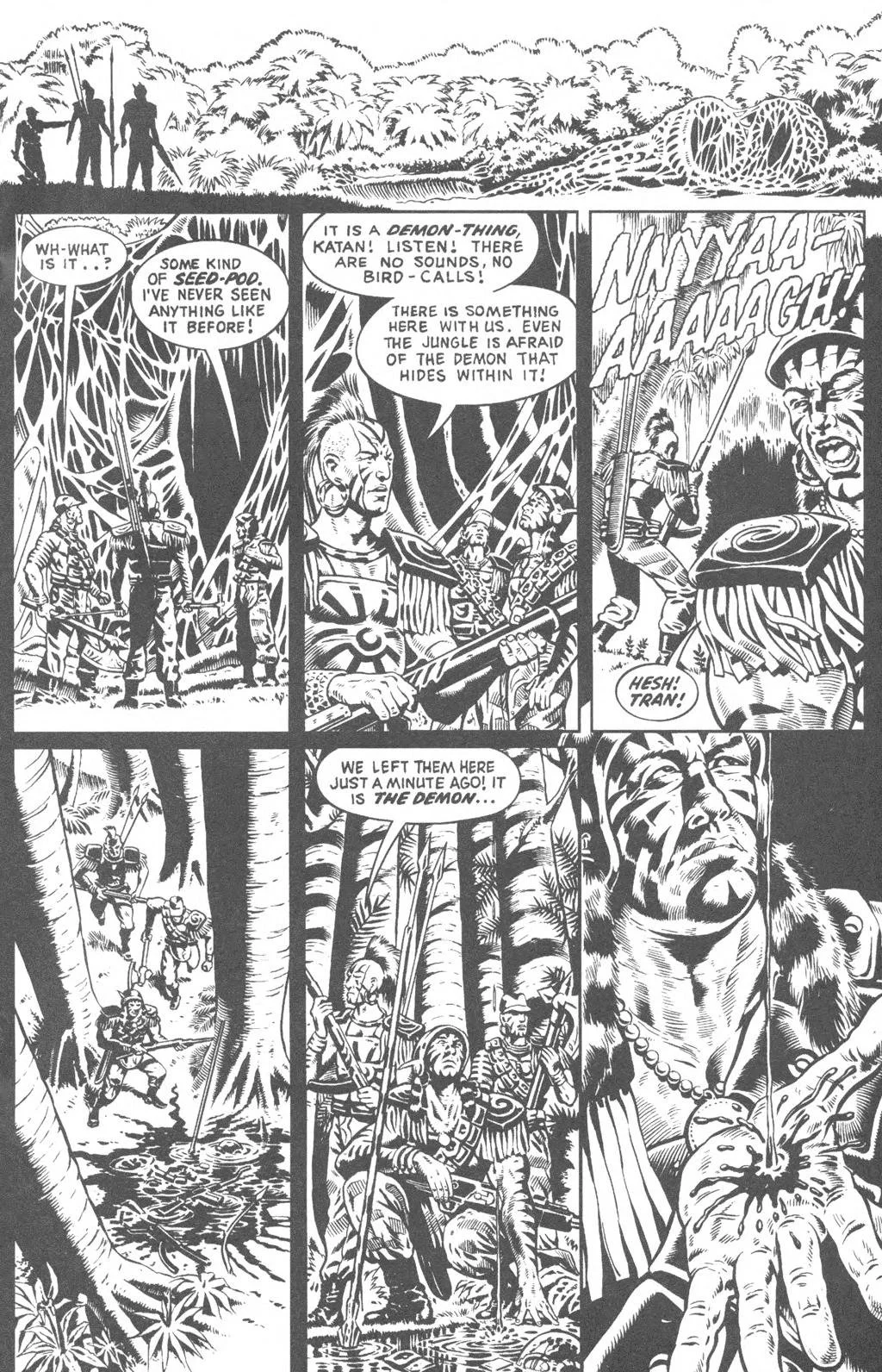
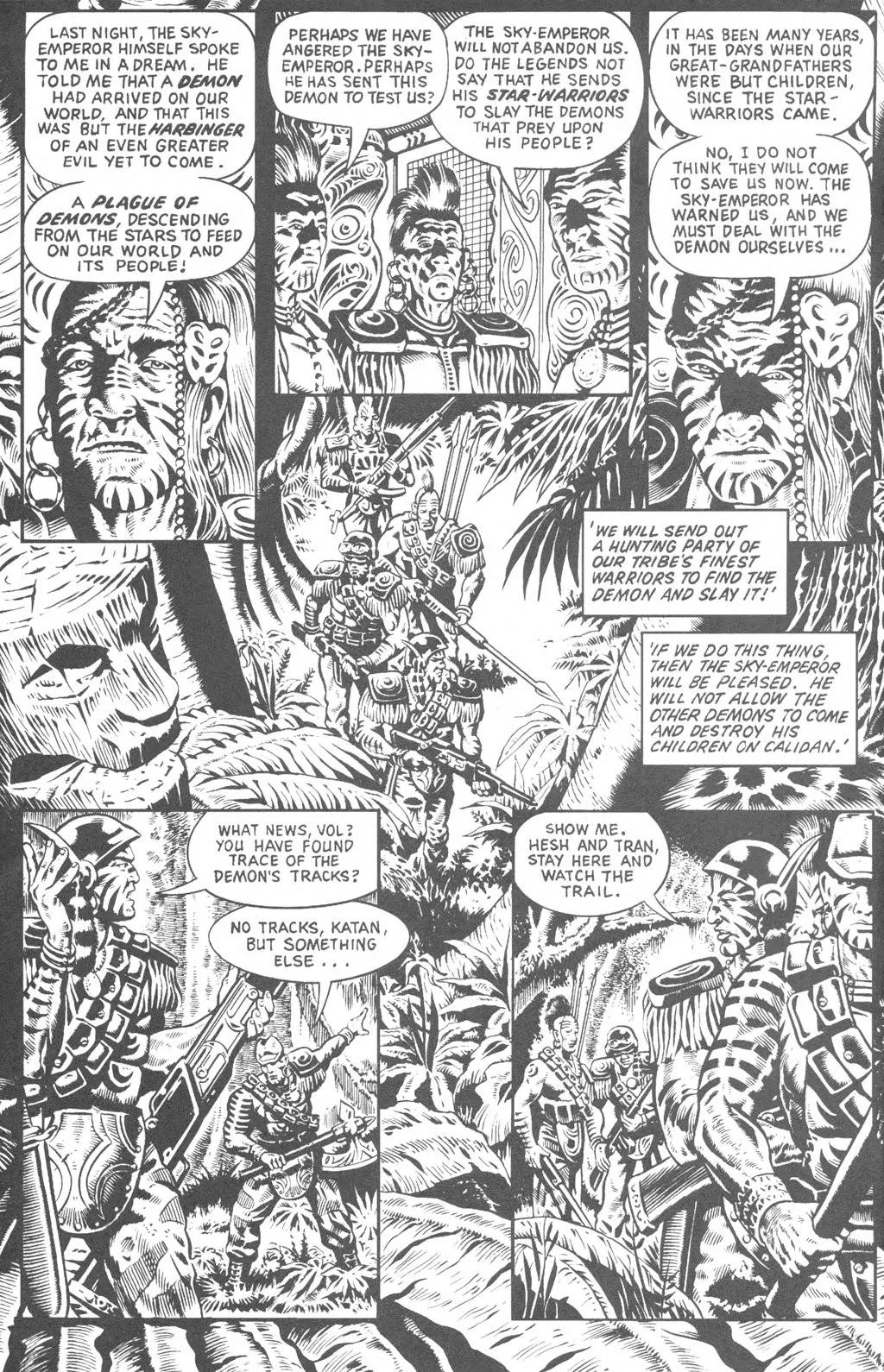
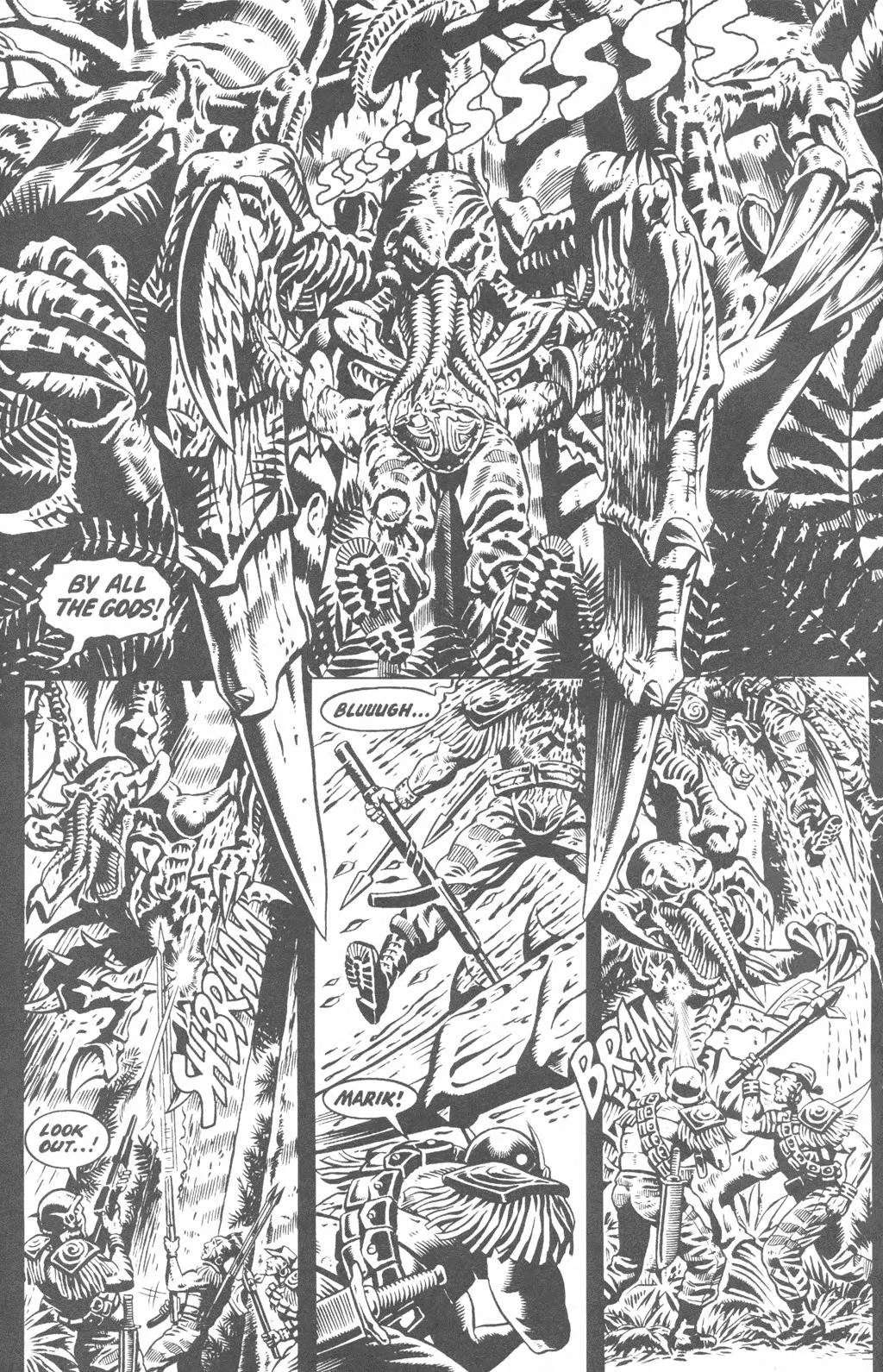
The plot unfolds on Calidan, a quiet, leafy fringe world where the local tribals spend their days in blissful ignorance of cosmic geometry, worshiping a distant figure they call the "Sky-Emperor" with the pious hope that he might keep the sky from falling on their heads. Naturally, the sky immediately falls on their heads. A falling star streaks through the canopy, carrying a Tyranid Lictor—a giant, stalky, chitinous vanguard organism composed entirely of razor blades, stealth technology, and bad intentions. A local hunting party led by a surprisingly pragmatic warrior named Katan sets off into the jungle to handle what they assume is a very angry, misplaced demon.
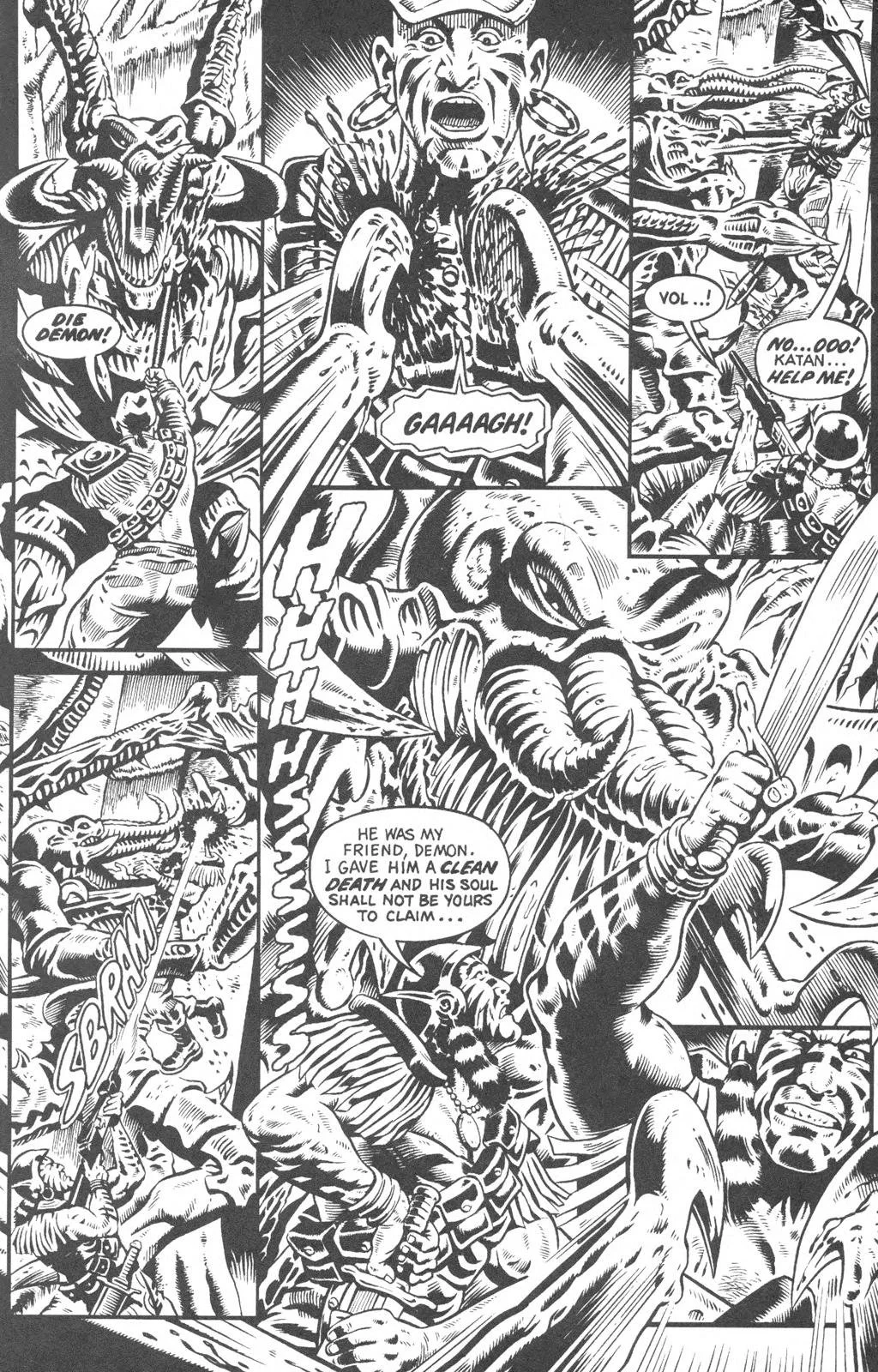
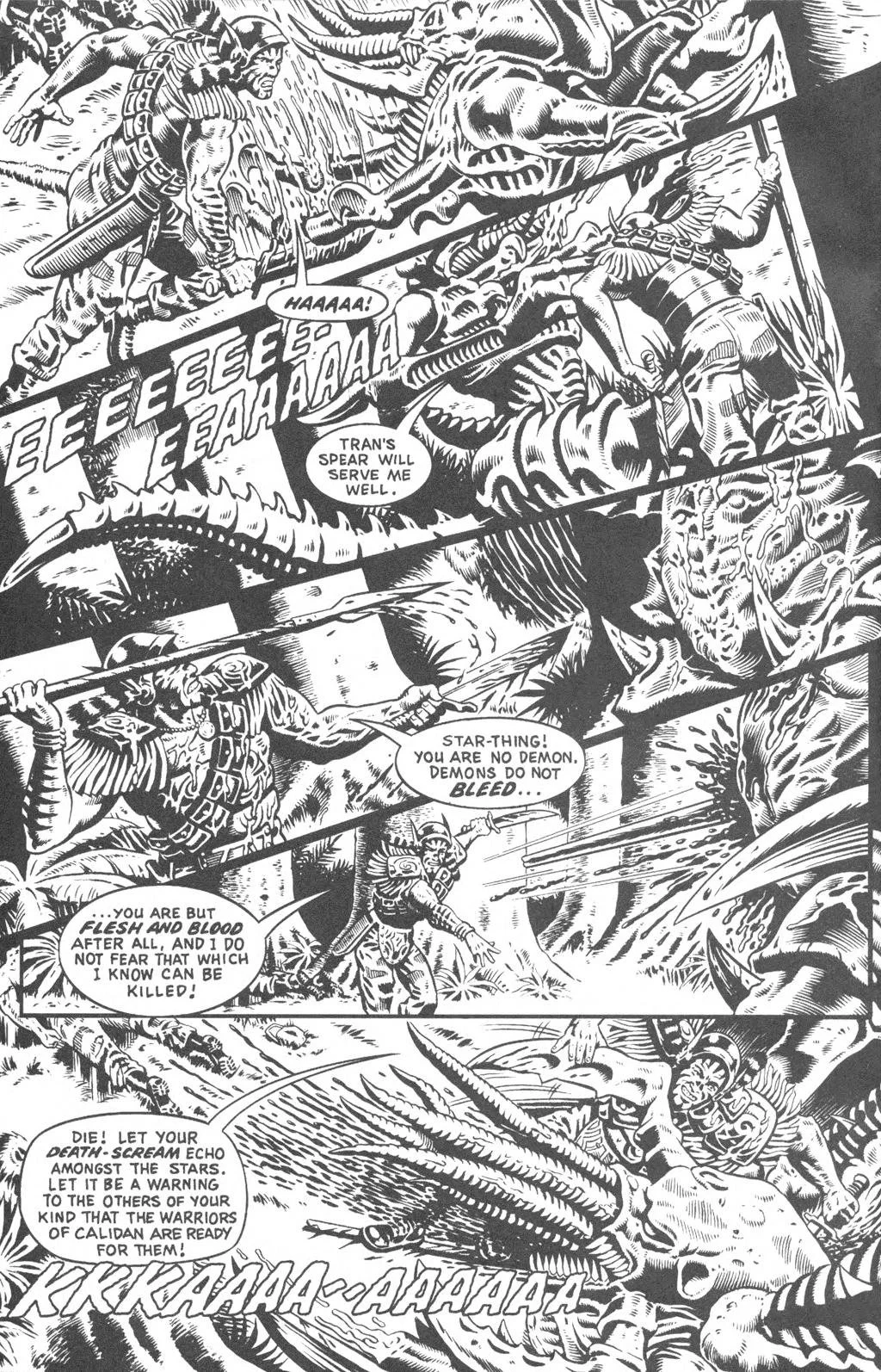
What follows is standard wilderness horror, executed with David Pugh’s signature visual style—an aesthetic that resembles an 18th-century woodcut engraving crossed with 2000 AD heavy-metal pulp, as if it had been fed through a shredder and reassembled by a bassist. Pugh puts immense, loving detail into the tribals' tattoos, ceremonial armor, and bandoliers, making their eventual dismemberment feel remarkably bespoke. The jungle sequence itself suffers a bit from over-lining—the heavy cross-hatching makes it occasionally difficult to tell where a warrior’s leg ends and a bio-engineered scythe-blade begins—but when the Lictor finally bursts through the brush in all its tentacled glory, it lands with proper pulp-thriller weight.
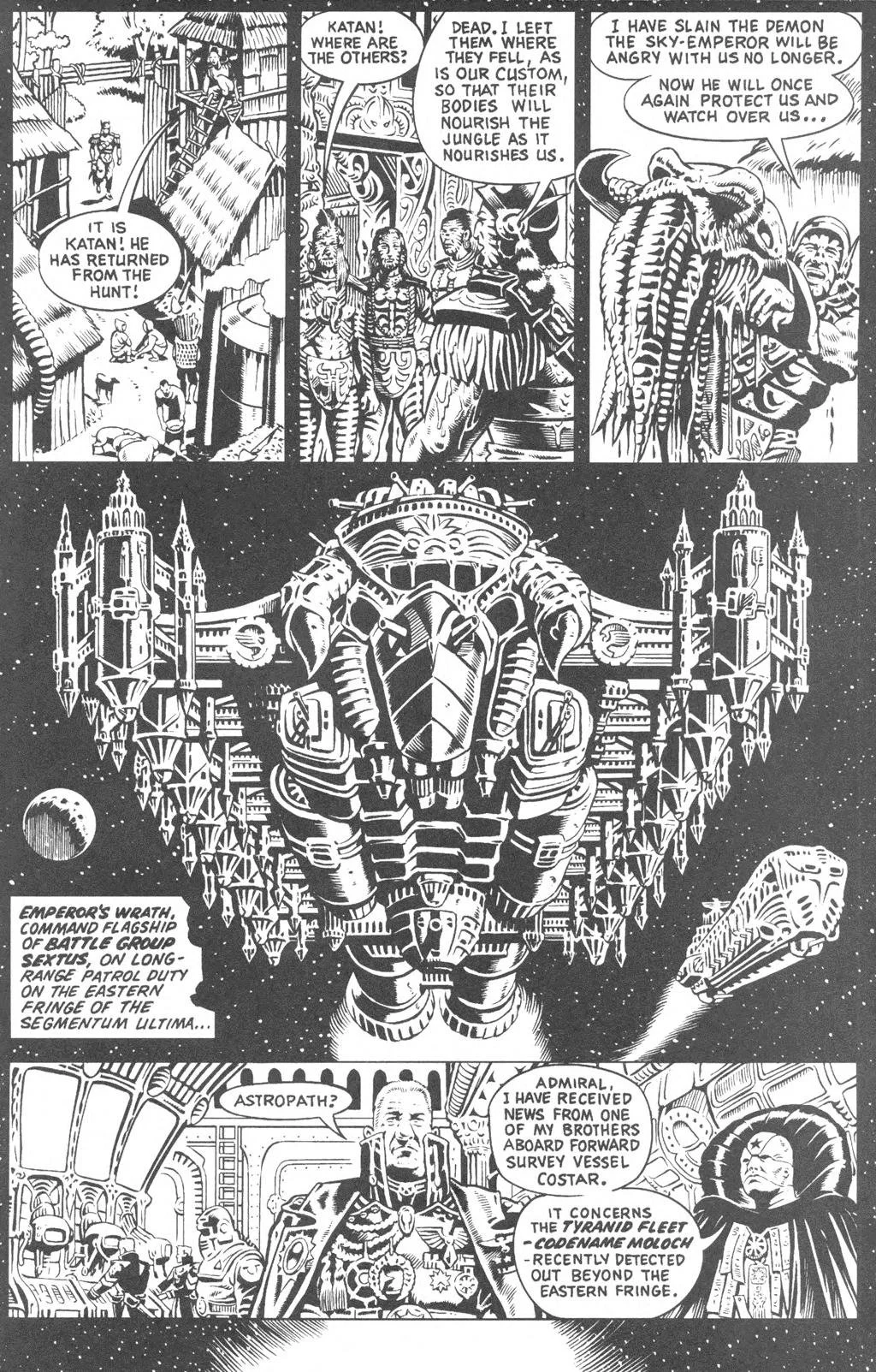
Katan, defying every trope of the genre, turns out to be exceptionally competent. He doesn't freeze, he doesn't scream at the heavens, and he uses basic observation to deduce that because the beast bleeds, it can be persuaded to die. Showing remarkable tactical discipline, he even mercy-kills a mortally wounded comrade to deny the beast its feast, and then proceeds to spear the Lictor through the throat like a true legendary hero. He cuts off its head, marches back to his village, and delivers a grand speech about how the tribals have earned the Sky-Emperor’s favor through sheer grit and martial violence. In almost any other fantasy setting, this is where the music swells and the credits roll over a grateful village.
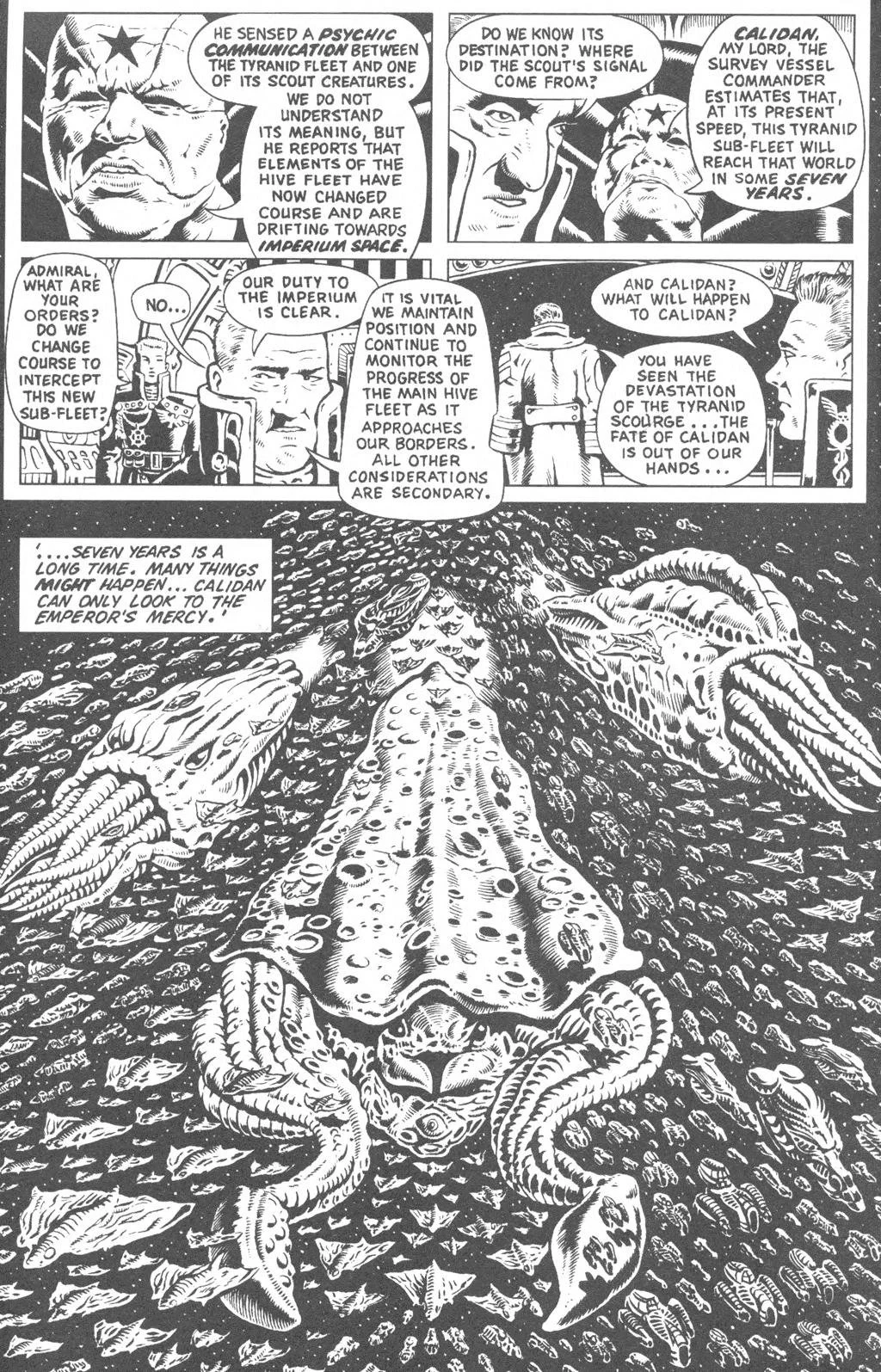
Unfortunately for Calidan, this is Warhammer 40,000, where heroics are merely a prelude to a larger clerical error. The scene cuts abruptly from the mud and sweat of the jungle to the cold, pristine bridge of the Gothic-class Imperial flagship Emperor’s Wrath. An Astropath reports that the Lictor’s final, agonizing death-shriek wasn't a cry of defeat, but a very effective long-distance psychic distress beacon that has just re-routed elements of Hive Fleet Moloch directly toward Calidan. When a well-meaning officer asks if the Navy will warp in to save these Emperor-fearing tribals, the Admiral delivers a response of breathtaking, middle-management coldness: their duty is to patrol the border, not detour for backwater rocks, leaving Calidan’s fate entirely in the hands of the Emperor’s mercy—which, as any student of the setting knows, is usually delivered in the form of total silence.
Beyond the immediate narrative punchline, "Predator & Prey" offers a fascinating glimpse into how Games Workshop was attempting to translate its grimdark tabletop IP into a viable comic format at the turn of the millennium. In the late 90s, Black Library was still finding its narrative feet, and Warhammer Monthly acted as an experimental sandbox where writers like Rennie could test the boundaries of the universe. By taking a high-concept monster like a Lictor—a creature usually relegated to tabletop stat blocks and terrifying codex fluff—and dropping it into an isolated, pre-industrial setting, the strip functions almost as a microcosm of imperial expansionism. It strips away the bolters, the Ceramite armor, and the grand stratagems of the Space Marines, showing us what happens when a sci-fi super-predator collides with sheer, unaugmented human will.
"Predator & Prey" stands as a prime artifact of late-90s British comic writing, dripping with the dark, ironical DNA of classic 2000 AD shorts. While the six-page limit forces Rennie to slaughter Katan’s hunting party with such frantic speed that you barely have time to learn their names, the core theme shines through with vicious clarity. Katan did everything right; he was brave, tactical, and victorious, yet his reward for saving his people was accidentally ringing the dinner bell for an alien locust swarm seven years early. What makes the piece endure, flaws and all, is its refusal to offer the reader a comfortable moral landing pad. In contemporary mainstream comics, a tribal leader overcoming an alien monstrosity through cleverness and sacrifice would be framed as a triumph of the human spirit. Here, Rennie and Pugh use that exact narrative expectation against the reader, twisting Katan's heroic victory into the literal mechanism of his world's annihilation. It’s a beautifully mean-spirited little story that reminds us that while you can certainly fight the darkness and win, the universe is always sitting in the back row, taking notes, and preparing to invoice you for the damage.