Sunday Musings - DIGGIN’ A HOLE
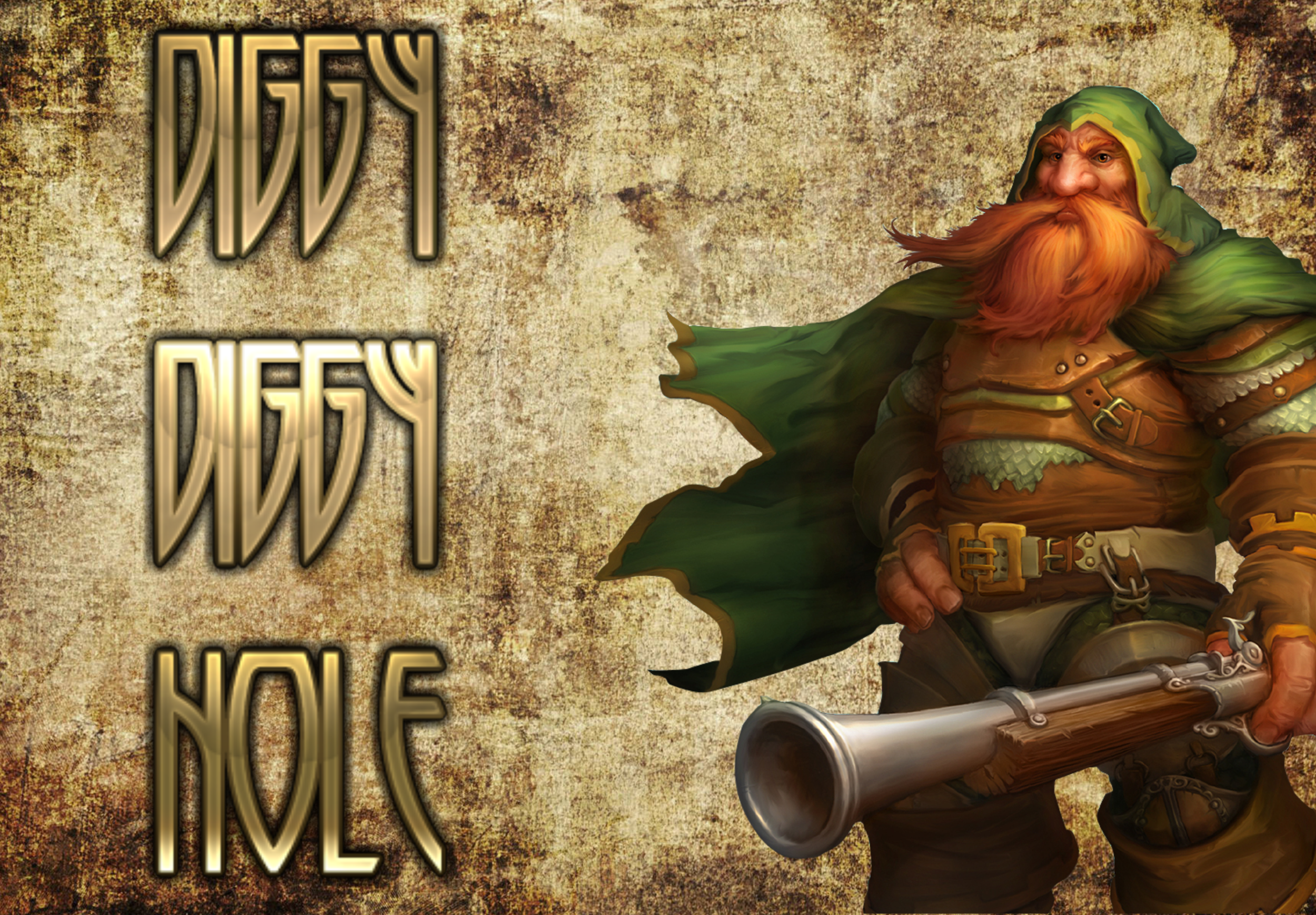
Did I expect to write an article on Diggy Diggy Hole when I began this entire concept? No. No I did not. But the connection between our Tabletop hobby and Yogscast is certainly strong enough to make it something worth exploring.
The history of “Diggy Diggy Hole” begins in 2011 during an episode of The Yogscast’s early and highly influential Minecraft series Shadow of Israphel. In Part 8, the players were tunneling downwards, improvising jokes about dwarves and mining traditions. Amidst this unscripted banter, one of the creators began chanting a rhythmic, dwarven-accented refrain: a simple loop built out of the words “I am a dwarf and I’m digging a hole.” It was never meant to be anything more than a momentary gag but it resonated.
That original chant functioned like many early YouTube-era jokes: spontaneous, rough around the edges, and infectious. Minecraft content at that time had a grassroots quality—videos felt like being in the room with the creators. Fans responded not merely to the content, but to the camaraderie behind it. “Diggy Diggy Hole” spread through comment sections, early fan tributes, and even in-game roleplay by viewers who adopted the chant while digging in their own worlds. The Yogscast didn’t push it; the audience pulled it forward.
The first major transformation occurred when a fan animator took the improvised chant and rebuilt it into a structured piece of music. This early “full song” version, by PatientZero, added instrumental backing, additional vocals, and bare bones machima animation. For many viewers, this was their first encounter with “Diggy Diggy Hole” as an independent song rather than a comedic clip. This circulated heavily, and it marked the moment where the song moved from simply being “that funny thing in the video” to becoming a shared cultural object that the community was actively shaping.
By 2014, the growth of the song’s popularity—and its visibility across online gaming culture—made it clear that “Diggy Diggy Hole” had become something of a signature reference for the Yogscast. Recognizing this, the team created an official, fully produced version. This iteration went far beyond the earlier fan animation. It featured arranged verses, layered harmonies, folk-influenced instrumentation, and animated set pieces that portrayed dwarves not just as comedic characters but as figures in a fully imagined world*. The updated lyrics expanded the dwarven mythology, giving context and texture to the digging, feasting, and kinship that defined the dwarven lifestyle in fantasy traditions. While the tone remained lighthearted, the production quality elevated the song, giving it a sense of completeness and intentional artistry.
This official version cemented the song’s legacy within the Yogscast community and introduced it to new audiences who discovered it as a standalone release rather than as part of a Minecraft series. For many fans, it became the definitive “Diggy Diggy Hole”—a polished embodiment of years of shared jokes, memes, and creative reinterpretations.
Yet the story did not end there. In 2019, the Italian folk/power-metal band Wind Rose released a metal cover of “Diggy Diggy Hole,” reimagining it through the lens of fantasy-inspired heavy music. Their version carried over the recognizable lyrical structure but transformed the melody, pacing, and overall tone. With soaring vocals, heavy percussion, and the grandeur typical of metal influenced by World of Warcraft imagery, the song took on a new life. The band embraced the dwarven theme wholeheartedly, framing the song as a proud labor anthem for their imagined dwarven culture. Audiences far outside the Yogscast community encountered it—many not realizing it came from a Minecraft video at all. It gained millions of views, reaching metal fans, tabletop RPG players, and fantasy enthusiasts.
Each phase of “Diggy Diggy Hole” reveals a pattern common in digital culture: a spontaneous seed becomes a shared joke, which becomes a community project, which eventually becomes a work with multiple interpretations across different mediums. The creators played a role, but so did the fans—perhaps an even larger one. Without the early viewer enthusiasm and the transformative fan-made song, there likely would never have been an official 2014 version. Without the visibility and cultural staying power created jointly by the Yogscast and their audience, Wind Rose would not have had a song to adapt.
What began as a momentary joke in a Minecraft playthrough now exists as a multi-version musical lineage stretching from improvised humor to polished production to full metal anthem. It shows how, in digital spaces, creativity often moves sideways rather than upward, passed from person to person, reshaped and reimagined each time in the tradition of how we as a species reframe and retell tales. It is through such a collective process, something ephemeral becomes enduring.
*and surprising amounts of emotional depth